
Threat Modeling
Identify risks early. Meet compliance
requirements with confidence.
Complex IT landscapes and growing regulatory requirements are increasing the pressure on organizations to identify security risks early and in a traceable manner, and to make well‑founded decisions. Threat Modeling offers an effective approach to make potential attack scenarios and risks visible at the architecture and system level.

Threat Modeling complements existing security measures, such as pentests, but does not replace them. It provides a structured basis for selecting technical and organizational measures in a targeted and effective way.
Threat Modeling as a Building Block of Modern Compliance Requirements
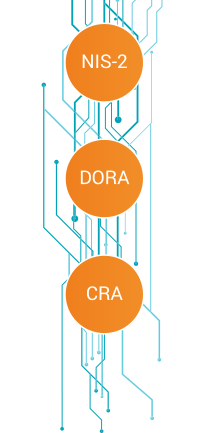
NIS‑2: Preventive Cyber Risk Management
The NIS 2 Directive requires the systematic identification and assessment of cyber risks. Threat Modeling helps analyze potential attack paths already at the architecture and design level.
DORA: Secure by Design and Resilience
DORA requires the early consideration of security risks in system design. Threat Modeling analyzes realistic attack scenarios and supports the development of digital resilience.
Cyber Resilience Act (CRA): Risk assessment across the entire lifecycle
The Cyber Resilience Act requires continuous risk assessments. Threat Modeling provides a consistent and traceable methodological foundation for this assessment.
Other Reasons Why Threat Modeling Is Gaining Importance
Ihr Titel
Your content goes here. Edit or remove this text inline or in the module Content settings. You can also style every aspect of this content in the module Design settings and even apply custom CSS to this text in the module Advanced settings.
Increasing System and Architecture Complexity
Networked, partly cloud-based IT landscapes make it difficult to maintain an overview of security risks. Threat Modeling helps analyze complex architectures in a structured way and makes security‑relevant dependencies visible at an early stage.
Increasing Professionalization of Attackers
Modern tools and AI enable attackers to exploit vulnerabilities, misconfigurations and architectural flaws in an increasingly targeted manner. Threat Modeling examines architectures and design decisions from an attacker's perspective and derives realistic attack scenarios.
Architecture and Design Decisions as a Key Lever
Risks often arise in the early phases. Threat Modeling helps identify these risks early and address them systematically in architecture and design decisions.
Why usd AG Is Your First Choice for Threat Modeling
Why usd AG Is Your First Choice for Threat Modeling
Implementation and Establishment of Threat Modeling in Organizations
Depending on their level of maturity, we accompany organizations either in the complete implementation of threat modeling or in the adoption and integration of existing approaches.
Our methodological approach to introducing and implementing threat modeling is based on proven methods and frameworks such as STRIDE and is tailored to the specific circumstances of your organization. Implementation is carried out in close collaboration with your teams, either remotely or on‑site, depending on the phase and context.
The introduction of Threat Modeling follows a structured, step‑by‑step approach:
Step 1
Scoping & analysis of the initial situation

Step 2
Threat Modeling Design
Step 3
Embedding in processes and governance

Step 4
Operationalization through templates and guidelines

Step 5
Pilot phase and initial application

Step 6
Enablement

Step 7
Transition into regular operations
Support Beyond the Initial Implementation of Threat Modeling
Depending on your needs, we support you beyond the methodological and organizational implementation of Threat Modeling with further consulting services and security analyses. Our security experts build on the insights gained from Threat Modeling.
Deepen & Develop the
Threat Modeling Approach
e.g. workshops, targeted coaching or expansion to other systems and applications.
Ensure the Quality and Consistency of Threat Modeling
e.g. reviews and technical support for your own Threat Modeling activities.
Adding Security Analyses
in a Targeted Manner
e.g. security scans, pentests or red team assessments.
Embed Insights into Governance and Security Organization
e.g. further development of your ISMS or support for related security topics.
Get More Information About Threat Modeling
EU Cyber Resilience Act (CRA): Threat Modeling as a Compliance Accelerator